
Wabi - Sabi
for Artists, Designers, Poets & Philosophers. Leonard Koren. Imperfect Publishing.

Wabi - Sabi
Intimate. Things wabi-sabi are usually small and compact, quiet and inward-oriented. They beckon: get close, touch, relate. They inspire a reduction of the psychic distance between one thing and another thing; between people and things.
Places wabi-sabi are small, secluded, and private environments that enhance one's capacity for metaphysical musings. Wabi-sabi tea rooms, for example, may have fewer than a hundred square feet of floor space. They have low ceilings, small windows, tiny entrances, and very subdued lighting. They are tranquil and calming, enveloping and womb-like. They are a world apart: nowhere, anywhere, everywhere. Within the tea room, as within all places wabi-sabi, every single object seems to expand in importance in inverse proportion to its actual size.
Unpretentious. Things wabi-sabi are unstudied and inevitable looking. They do not blare out
… They are understated and unassuming, yet not without presence or quiet authority. Things wabi-sabi easily coexist with the rest of their environment.
Things wabi-sabi are appreciated only during direct contact and use; they are never locked away in a museum. Things wabi-sabi have no need for the reassurance of status or the validation of market culture. They have no need for documentation of provenance. Wabi-sabi-ness in no way depends on knowledge of the creator's background or personality. In fact, it is best if the creator is of no distinction, invisible, or anonymous.
Earthy. Things wabi-sabi can appear coarse and unrefined. They are usually made from materials not far removed from their original condition within, or upon, the earth and are rich in raw texture and rough tactile sensation.
Their craftsmanship may be impossible to discern.
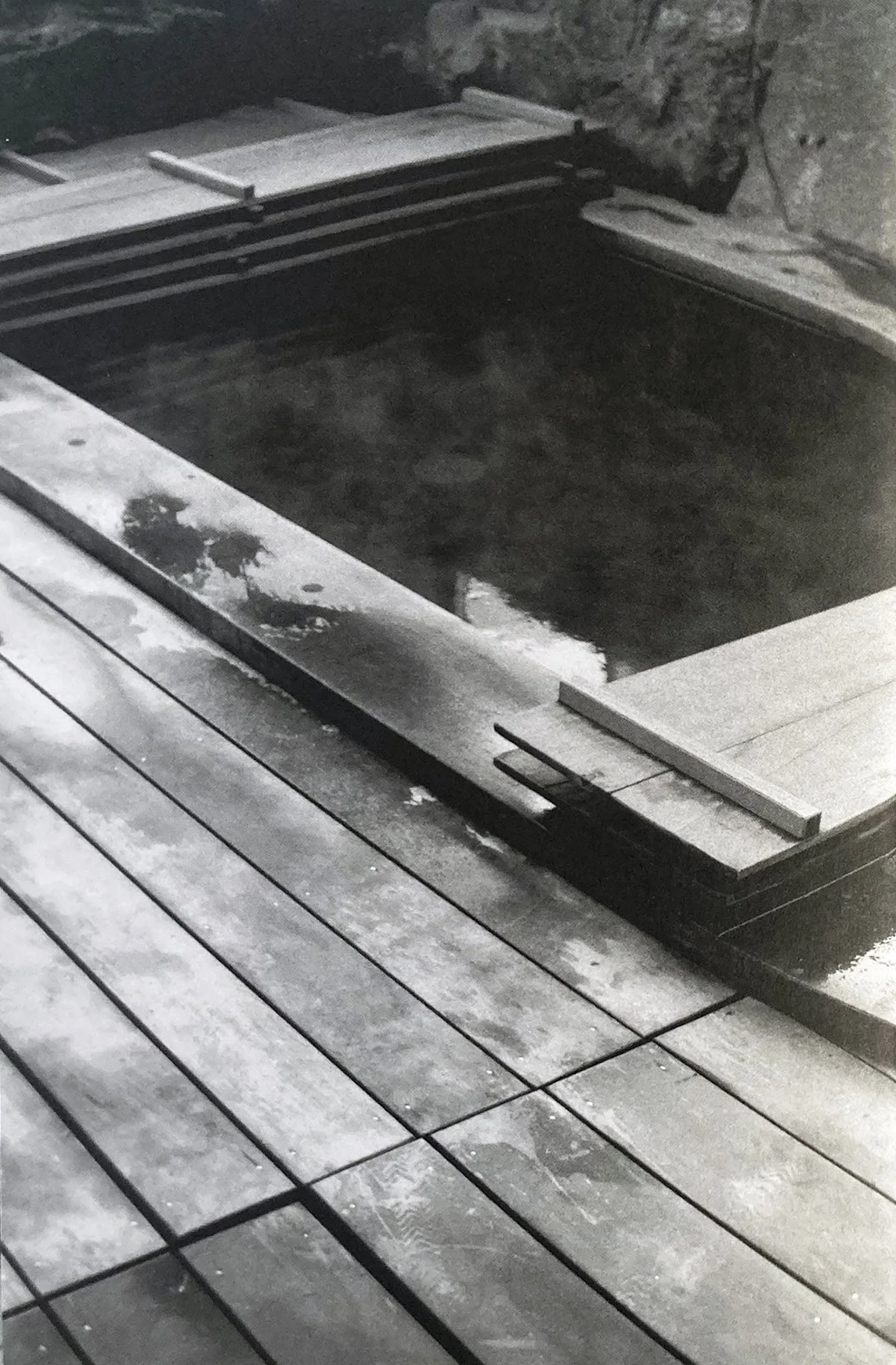
Why Designers Don't Make
Great Baths
The reductive tendencies of industrial design. The overriding character of most contemporary baths is that of a mix-and-match collage of off-the-shelf appliances-tubs, stalls, shower heads, soap trays, faucets, and so on-combined with various waterproof surfacing materials. The industrial designers who create these fixtures and materials, working under constraints of not enough time, tight budgets, notions of sociocultural "average consumers," corporate safe thinking, and the pressure to outsell the other products in the marketplace, tend to reduce their output to simplistic, easy-to-grasp-iconographically impressive, mnemonically effective qualities.